
Food Security is a Priority This Election: Community Voices Matter
With Ottawa’s municipal election approaching on October 26, we have an important opportunity to shape the future of our city and build an Ottawa where everyone can access the food they need to thrive.
At the Ottawa Community Food Partnership (OCFP), we believe that food security is about more than food. It is connected to housing, income, transportation, neighbourhood services, and the policies that shape people’s everyday lives. That’s why we’ve been working to help residents feel informed and prepared to participate in this election.
Helping Residents Get Ready to Vote
Over the last few months and in collaboration with OCFP partner agencies, we developed a suite of election resources for organizations to bring directly to residents who access and support their services. The goal of these resources is to help residents understand how municipal government works, connect the issue of food security with decisions made at City Hall, and feel more confident having conversations with their friends, neighbours, and even election candidates.
These resources are designed to make civic engagement more accessible and meaningful.
But being election-ready is about more than knowing how to vote. It’s also about ensuring that the experiences and priorities of people across Ottawa are heard by those seeking to represent them.
What Do You Want Candidates to Know About Food Security?
Over September and October, OCFP partners invited Ottawa residents to share what they want candidates to know about food security in our city. Partners wanted to create space for people to speak directly about what matters to them, their communities, and their vision for a more food-secure Ottawa, with the safety of anonymity. Here are some of the responses:
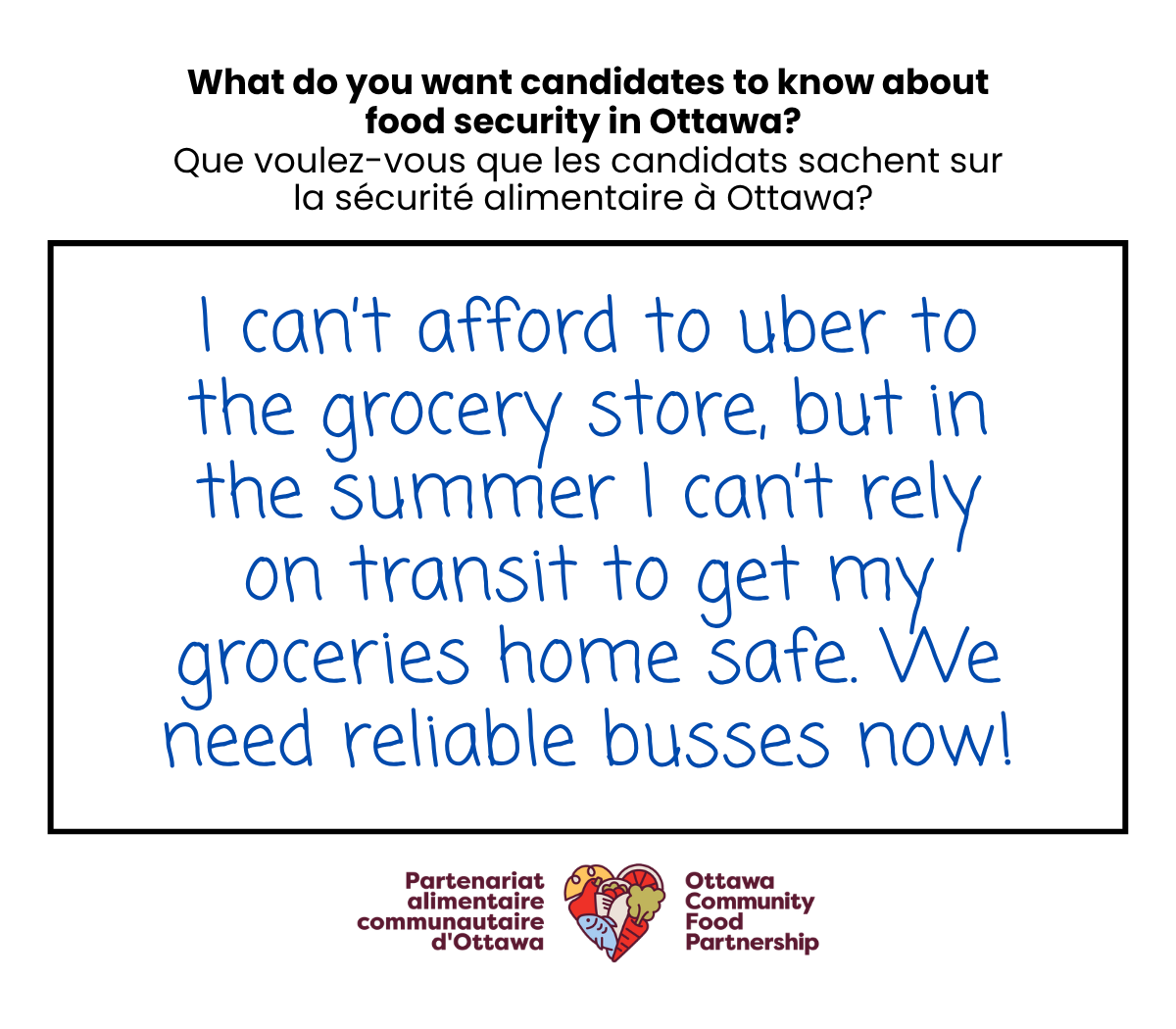
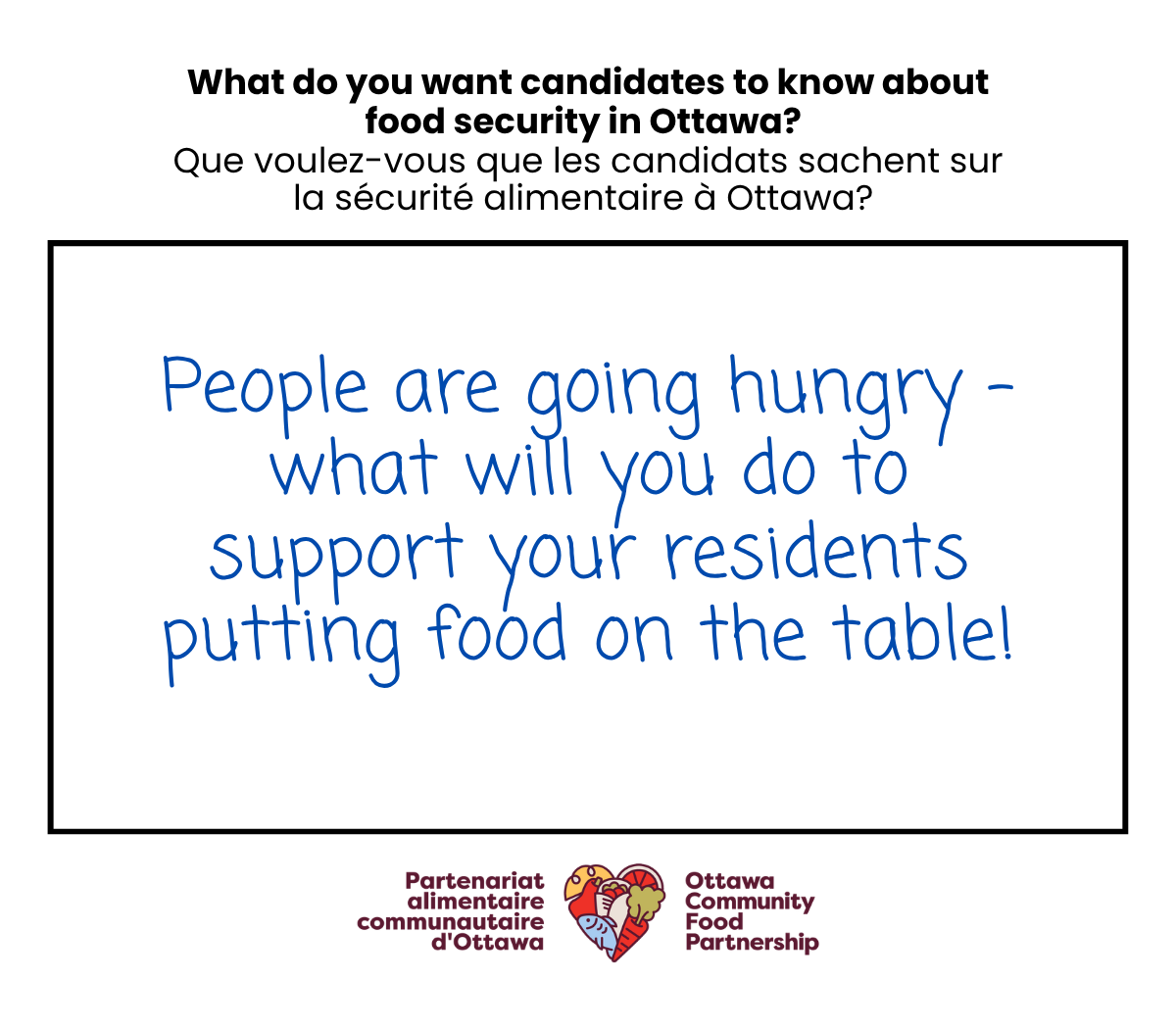

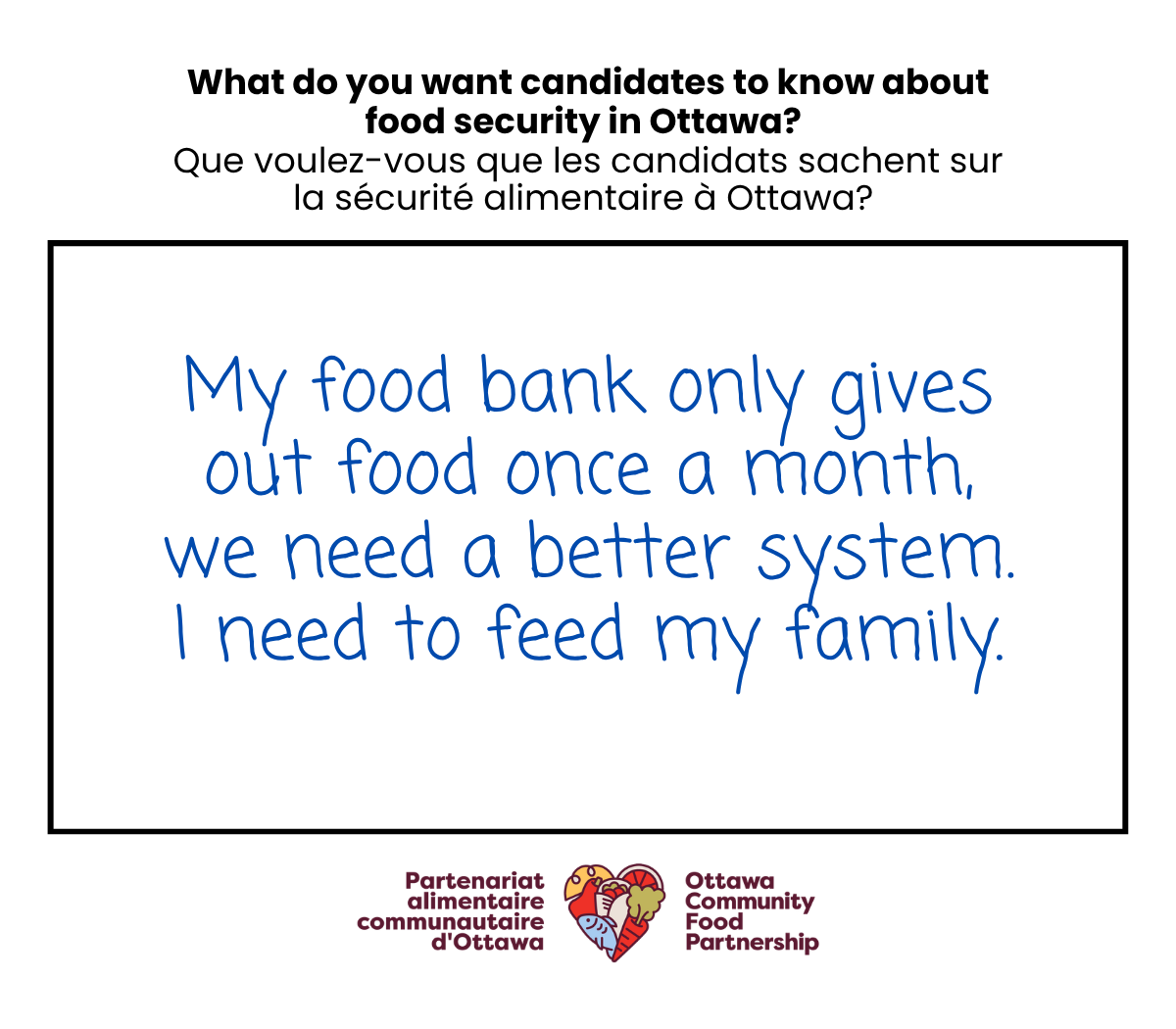
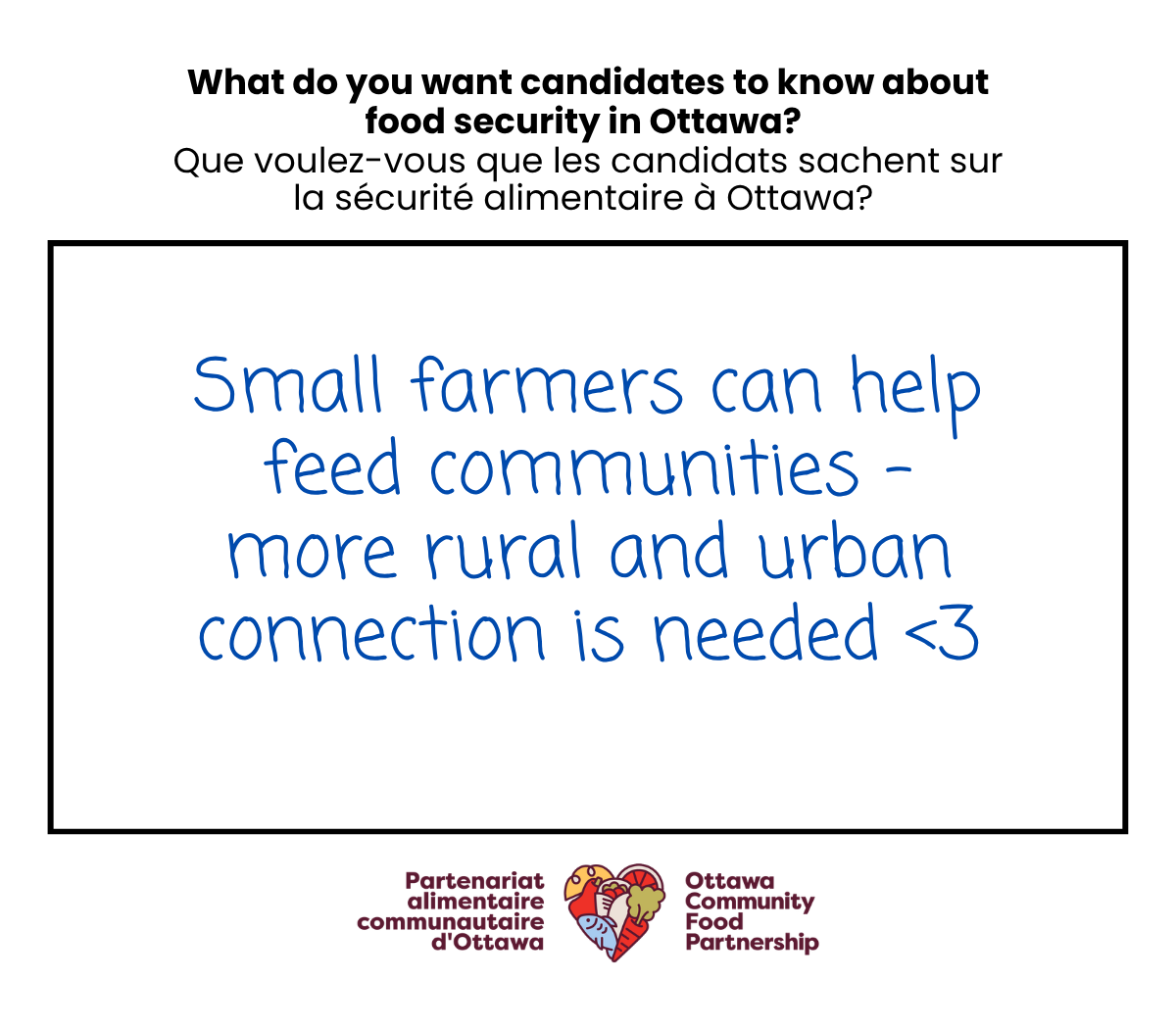

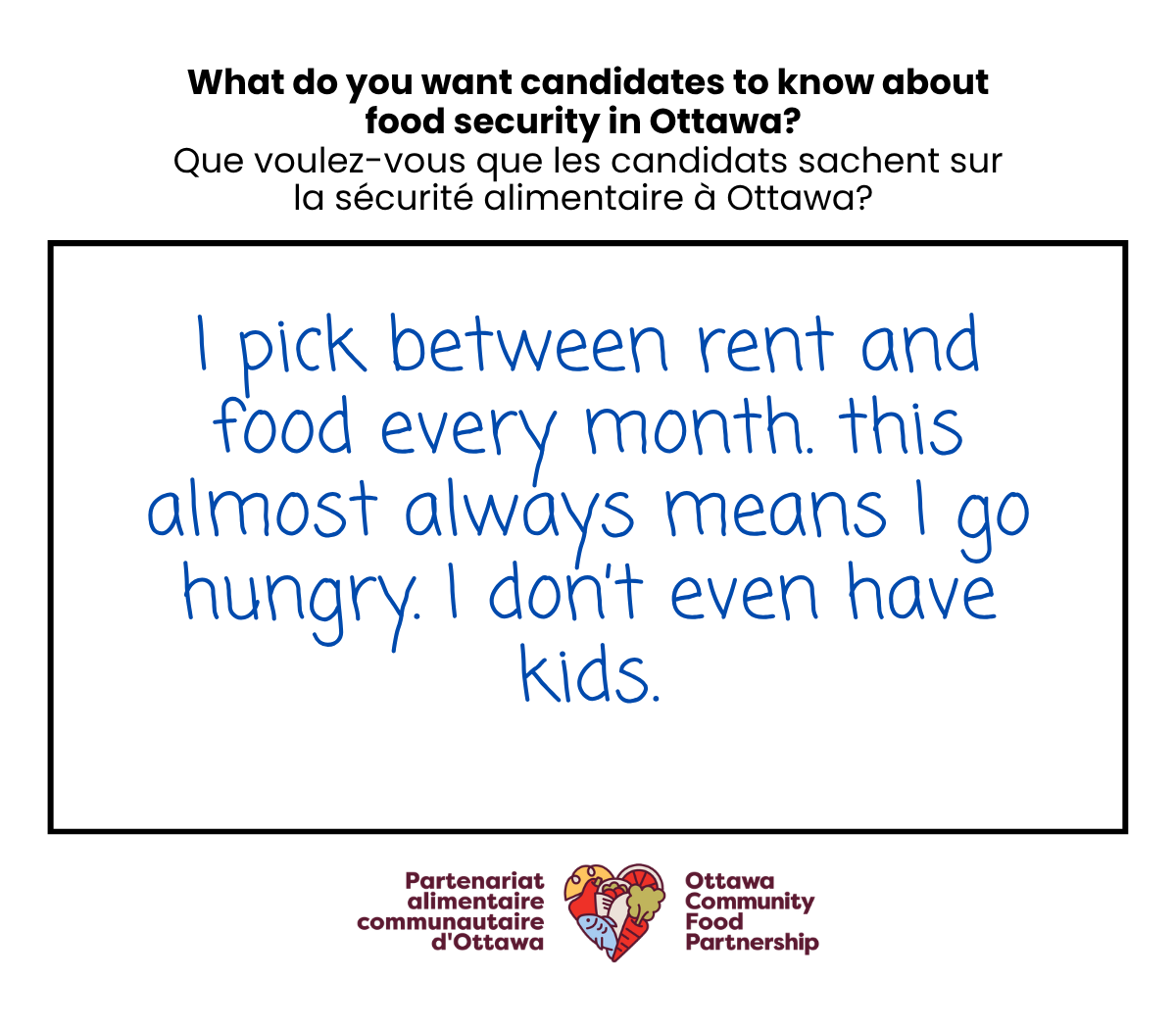
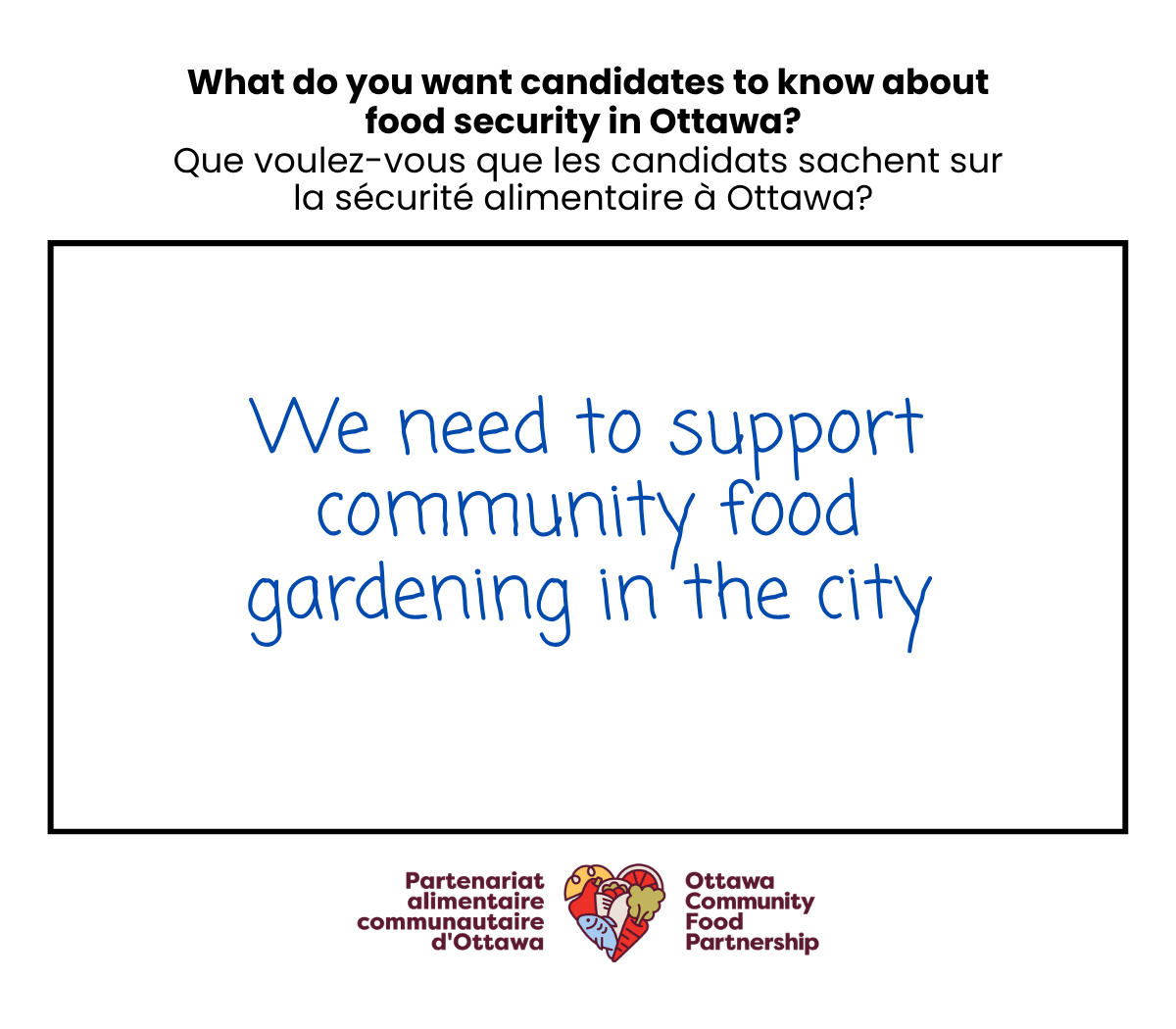
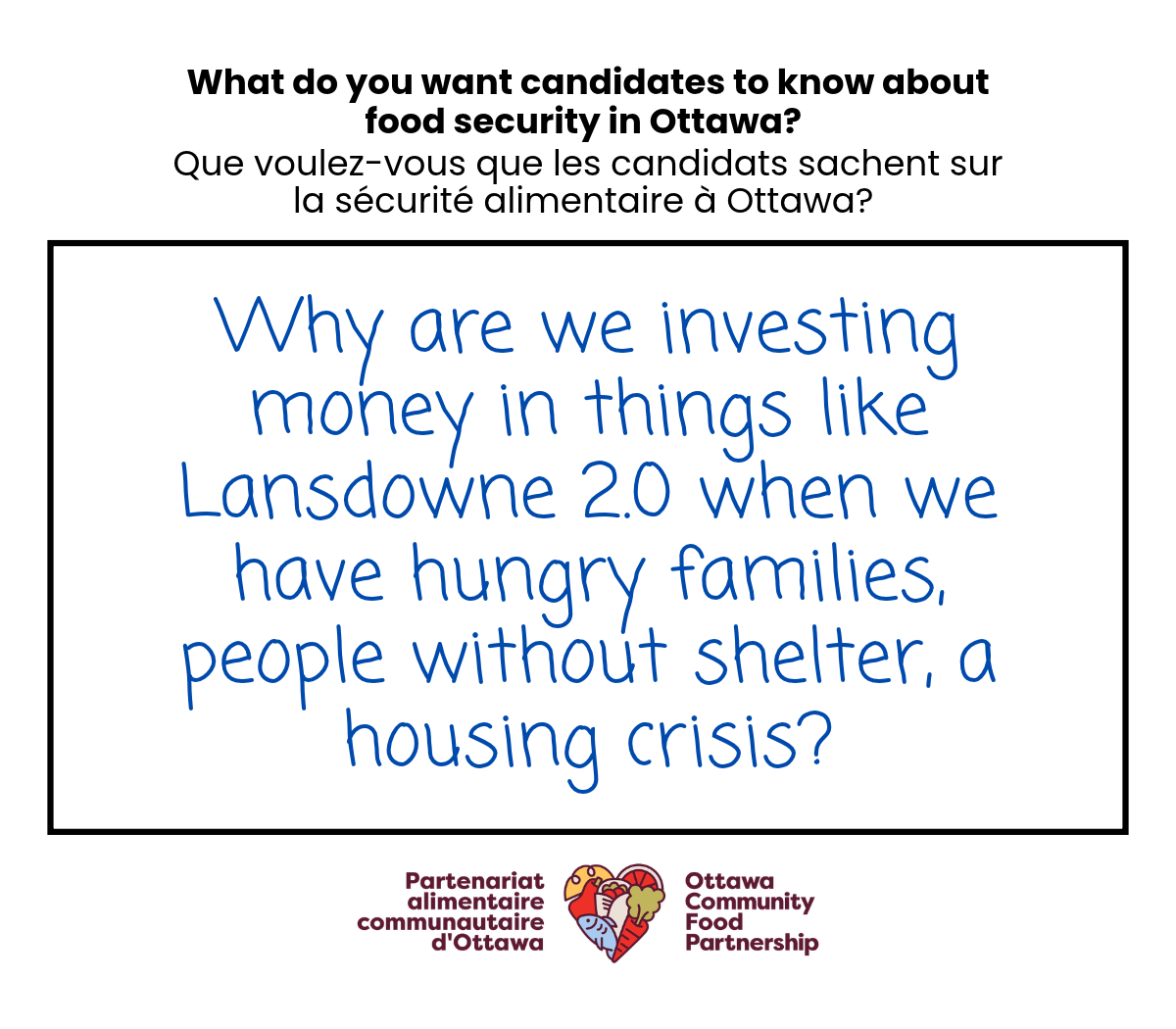
A Call to Ottawa’s Election Candidates
To all candidates running for Mayor or City Council: we encourage you to make food security a priority in your campaign and in your work if elected.
We invite you to listen to residents, engage with community organizations, and speak clearly about how you will address the root causes of food insecurity and increasing community food solutions. What will you do to strengthen community food programs/organizations, support the organizations working on the front lines, and advance policies that make food more accessible and affordable? How will you work with community partners and other levels of government to create lasting change?
How will you contribute to the shift away from the reliance on charitable food models?
Emergency food programs provide essential support, but they cannot solve food insecurity alone. Ottawa needs sustained investment, coordinated action, and leadership that recognizes the connections between food, poverty, housing, transportation, safety, planning, and community wellbeing.
As we approach election day, let’s ensure that the voices of residents experiencing food insecurity, and the solutions emerging from our communities, help shape the future of our city.
